AI Fabrix provides one reusable foundation for business meaning, authoritative knowledge, permissions, decision authority and approved operations.

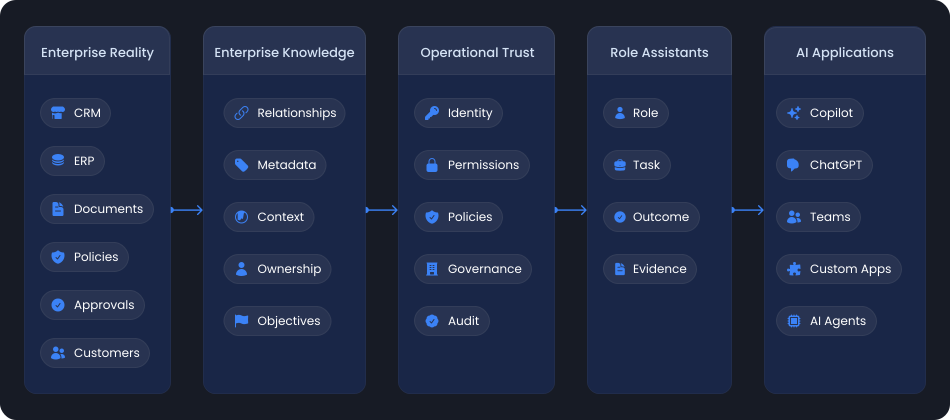

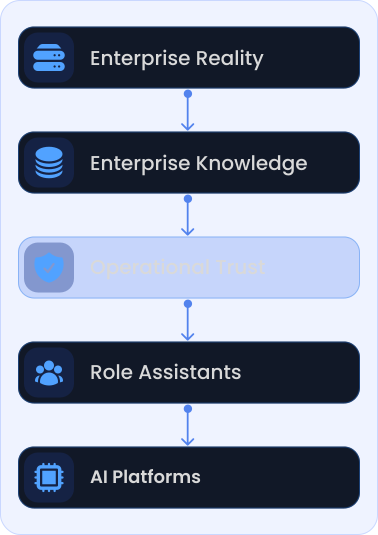
Enterprise definitions become reusable, versioned operational assets. A change creates a new candidate that must pass the appropriate validation and release controls. Evidence definition records the facts, decisions, controls, outcomes and business measures that must be captured when work is completed.

Teams work through structured, inspectable definitions. AI may assist with drafting, but people validate their meaning.
AI Fabrix then generates a candidate that must be tested, certified, approved and deployed.
AI Fabrix generates governed capabilities from enterprise definitions. It does not generate uncontrolled authority.
Semantic relevance + business metadata + permission-aware filtering. Role Assistants narrow retrieval to the active role and outcome. At retrieval time, Operational Trust limits which capabilities and content are available for the active user and case.
Enterprise Knowledge supplies business context → Operational Trust applies boundaries → Role Assistants perform governed work → Evidence Fabrix proves the outcome.


AI has no authority of its own. Every action runs on behalf of an identified person and remains within that person's existing organisational authority and access.
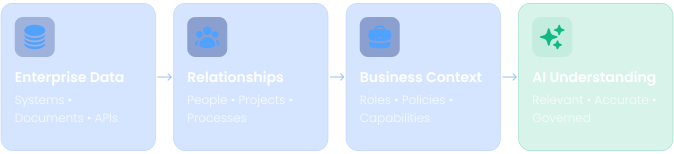
Traditional RAG can retrieve similar content. It does not explain which business context applies, which source is authoritative, which version is current or which information the user may receive.
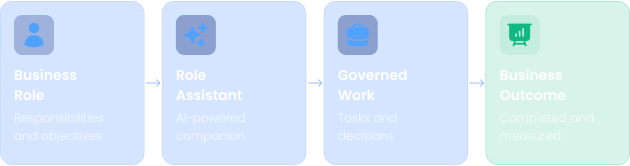
A Role Assistant is not a chatbot persona. It is generated from Enterprise Knowledge, Operational Trust, approved operations and Evidence requirements, then validated before release.
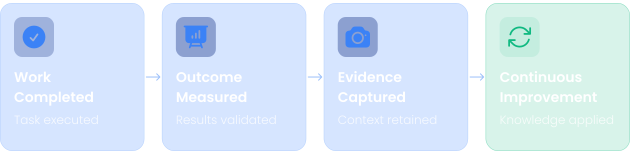
Evidence records business-significant facts behind completed work—not just tokens, conversations or assistant usage.
01. Definition
Define the outcome, entities, authoritative information, rules, permissions, approvals, operations and Evidence.
02. Generation
Create an inspectable and testable candidate capability. Generation does not authorise operational use.
03. Validation
Test its structure, knowledge, permissions, policies, operations, approval paths and Evidence requirements.
04. Release
Deploy the approved version to the appropriate business role through an approved AI interface.
05. Operation
Verify the user and case, resolve context, retrieve permitted knowledge and expose only approved operations.
06. Evidence
Record context, sources, rules, authority checks, operations, human decisions and the completed outcome.
07. Improvement
Use completed cases to propose a new version. A proposal never changes operational behaviour automatically.
Controlled loop
Human authority remains explicit throughout.
An account team needs to prepare renewals faster without losing margin or bypassing pricing authority. The first use case creates value — every following use case starts with more of the business foundation already available.
Connects customer, agreement, account history and pricing information.
Verifies permitted information, actions and commercial approval authority.
Assembles context, applies pricing rules, checks authority, prepares the renewal and routes exceptions.
Records sources, rule versions, authority checks, approvals and the business outcome.
AI Fabrix is deployed as an Azure Marketplace managed application entirely within your organisation's own Azure tenant.
Start with one process that has a measurable outcome, accessible information and clear authority.

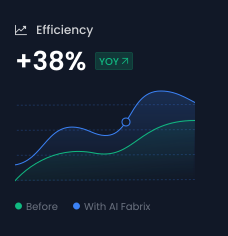
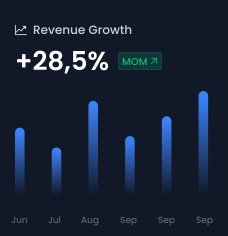
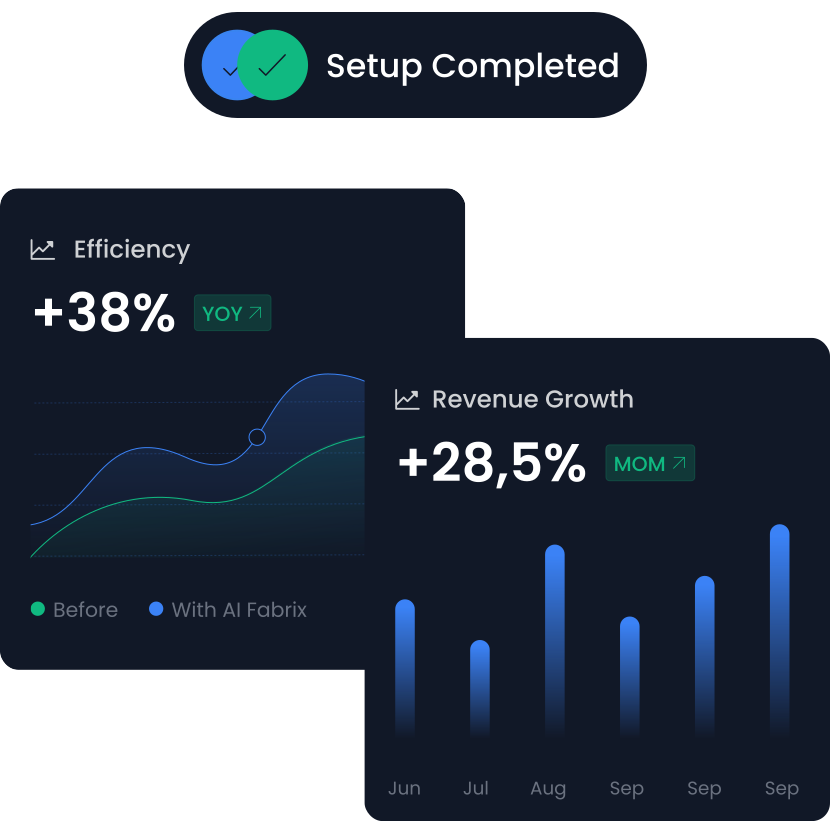

We’ve gathered the most frequent questions about AI Fabrix — from setup
to security. Explore the Q&A or start
a free trial now.

AI Fabrix is an Azure-native, in-tenant enterprise AI platform that enables secure, governed AI adoption at scale.
It turns fragmented enterprise systems into permission-aware, AI-ready data using open standards—so AI agents, workflows, and applications can run safely in production,
not just pilots.
AI Fabrix runs entirely inside your Azure tenant and uses standard Azure services for compute, storage, networking, and identity.
There is no shared SaaS component and no external service accounts. Infrastructure sizing depends on workload and scale, and follows a predictable, infrastructure-based model.
Yes. Security and governance are foundational to AI Fabrix. All data and AI operations run inside your Azure tenant, using Entra ID for identity, ABAC/RBAC for access control, and full audit logging for every data access and AI action.
This enables compliance with enterprise and regulated-industry requirements.
Most customers start with a guided deployment inside their Azure tenant. This includes setting up governance with Miso, connecting core systems through CIP, and deploying an initial AI agent or use case. From there, teams expand incrementally using the same governed foundation.
Yes. AI Fabrix integrates with enterprise systems using OpenAPI and Composable Integration Pipelines (CIP). This approach avoids custom SDKs and service accounts, automatically enforcing identity-based access (ABAC/RBAC) and providing full metadata, lineage, and auditability across systems such as CRM, ERP, HR, Finance, SharePoint, and custom APIs.
AI Fabrix offers documentation, reference architectures, and enterprise support options.
Customers also receive guidance on governance setup, integration patterns, and production rollout to ensure AI moves safely from pilot to scale.