As enterprise AI systems become more advanced, organizations are moving beyond traditional chatbots and standalone large language models toward intelligent AI agents capable of reasoning, retrieval, and autonomous task execution. One of the most important technologies driving this shift is Retrieval-Augmented Generation (RAG).
RAG AI agents combine the reasoning capabilities of large language models with real-time enterprise knowledge retrieval, allowing AI systems to access trusted business data before making decisions or generating responses. Unlike traditional AI models that rely primarily on static training data, RAG AI agents operate with live organizational context, semantic awareness, and dynamic access to enterprise systems.
This evolution is enabling a new generation of enterprise AI applications capable of:
As organizations scale AI adoption, RAG AI agents are becoming a foundational architecture for intelligent enterprise automation, operational copilots, and AI-driven business workflows.
Platforms such as AI Fabrix are helping enterprises operationalize these systems by combining semantic retrieval, governance-aware orchestration, runtime observability, and enterprise integration into scalable AI agent infrastructures.
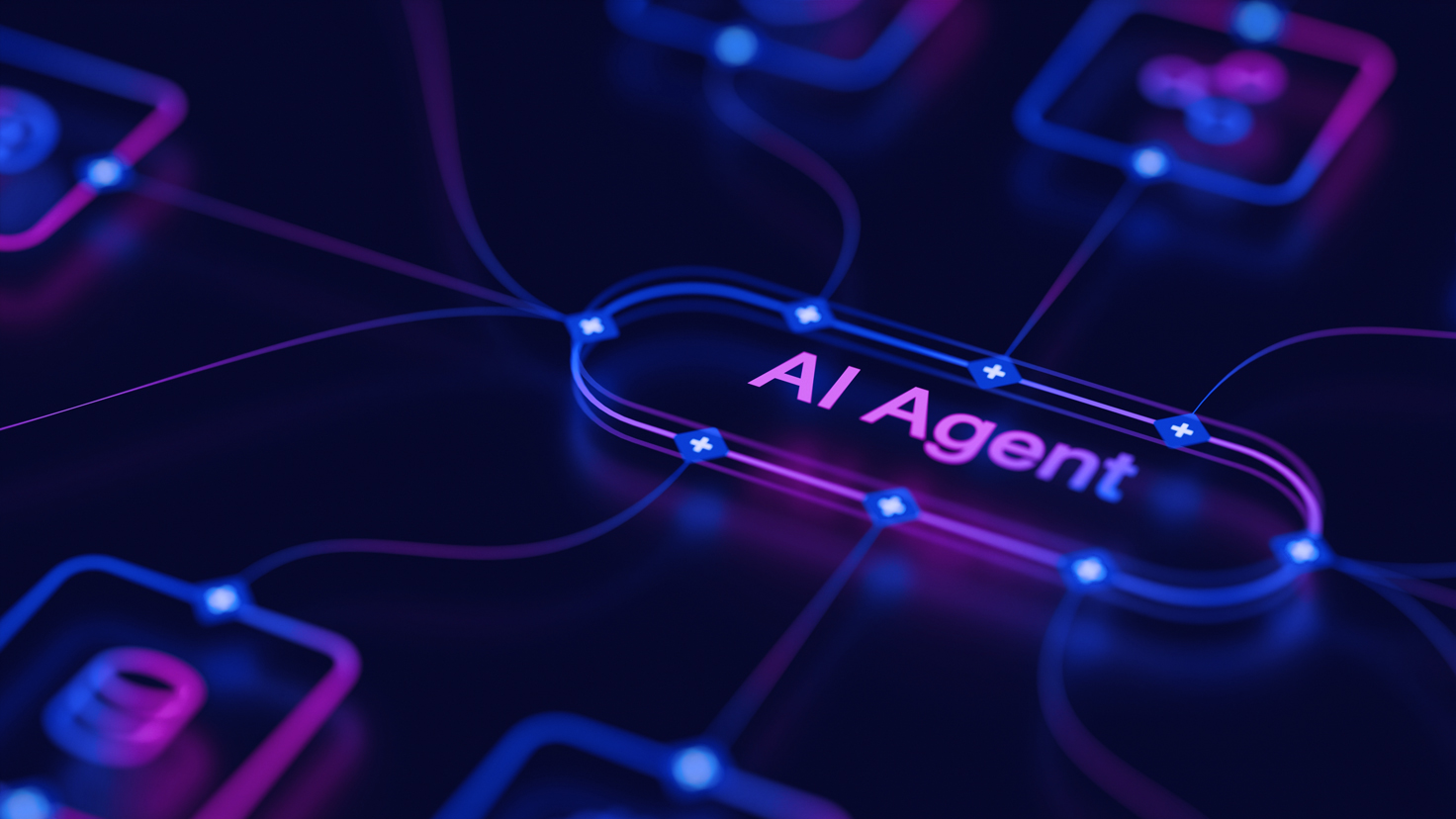
RAG AI agents are intelligent AI systems that combine Retrieval-Augmented Generation with agentic capabilities such as reasoning, planning, memory, and task execution. Instead of simply answering questions, these agents can retrieve relevant enterprise knowledge dynamically and use that information to perform actions across operational systems.
Traditional large language models generate responses primarily from pre-trained knowledge. RAG AI agents extend this capability by retrieving live information from:
This retrieval layer enables the agent to operate with current organizational knowledge rather than relying solely on static model memory.
In practice, RAG AI agents can:
Because of these capabilities, RAG AI agents are becoming increasingly important for enterprise AI deployments where operational awareness and governance are critical.
RAG AI agents combine multiple AI layers into a coordinated operational workflow. While architectures vary, most enterprise RAG agent systems follow a similar process.
When a user submits a request, the agent first analyzes the intent and determines what information or actions are required. Instead of immediately generating a response, the system retrieves relevant information from connected enterprise systems using semantic retrieval mechanisms.
The retrieved context is then passed into the large language model, which reasons over the information and determines the next steps. Depending on the workflow, the agent may:
This creates AI systems that are significantly more operationally capable than standalone chatbots or traditional RAG pipelines.
A typical RAG AI agent architecture includes:
Modern enterprise platforms such as AI Fabrix help organizations unify these layers into governed AI agent ecosystems that support secure and explainable operational automation.
Traditional enterprise AI systems often struggle with limited context awareness, fragmented integrations, and the inability to interact intelligently with operational systems. RAG AI agents address these limitations by combining retrieval, reasoning, and execution into a single architecture.
This is especially important because enterprise environments require AI systems to:
Without retrieval and operational context, AI agents may generate inaccurate responses or make decisions based on incomplete information.
RAG AI agents improve enterprise AI by enabling:
As enterprises move toward AI-driven operations, RAG agents are becoming the foundation for intelligent workflow orchestration and autonomous enterprise systems.
RAG AI agents rely on several interconnected layers that work together to support retrieval, reasoning, orchestration, and operational execution.
The retrieval layer enables the agent to access enterprise knowledge dynamically using:
This layer ensures the AI operates with accurate and relevant business information.
The LLM acts as the reasoning engine of the agent. It analyzes retrieved context, interprets user intent, plans actions, and generates responses.
Common models used in enterprise RAG agents include:
The retrieval layer significantly improves the reliability and contextual accuracy of these models.
RAG AI agents often interact with APIs, enterprise systems, and operational tools. Orchestration layers coordinate:
Platforms like AI Fabrix help enterprises orchestrate these interactions while embedding governance and operational consistency directly into AI workflows.
Enterprise RAG agents must operate securely and transparently. Governance layers help enforce:
These controls are essential for deploying AI agents safely across enterprise systems.
As AI systems evolve, many organizations are moving from traditional RAG architectures toward more advanced agentic RAG systems. While both approaches use retrieval to improve AI outputs, they differ significantly in capability and operational complexity.
Traditional RAG systems primarily focus on retrieval-enhanced response generation. The workflow is relatively linear:
These systems are commonly used for:
Traditional RAG improves accuracy and reduces hallucinations, but it typically lacks autonomous execution and multi-step reasoning capabilities.
Agentic RAG extends traditional retrieval systems by adding:
Instead of simply generating answers, agentic RAG systems can:
This creates more intelligent and operationally capable AI systems suitable for complex enterprise environments.
As organizations adopt AI-driven operations, agentic RAG architectures are becoming increasingly important for enabling scalable enterprise automation and intelligent AI orchestration.
RAG AI agents provide enterprises with a more advanced and operationally capable form of AI compared to traditional standalone models or basic retrieval systems. By combining retrieval, reasoning, orchestration, and execution, these agents can support complex business workflows with greater accuracy and contextual awareness.
One of the biggest advantages of RAG AI agents is their ability to operate using real-time enterprise knowledge. Instead of relying solely on static training data, they retrieve current business information dynamically during execution.
Additional benefits include:
Because of these capabilities, RAG AI agents are increasingly becoming the foundation for enterprise AI automation and intelligent operational systems.
Organizations across industries are adopting RAG AI agents to automate workflows, improve operational efficiency, and enhance enterprise knowledge access. These agents are especially valuable in environments where AI systems must interact with multiple business systems securely and intelligently.
RAG AI agents are commonly used as enterprise knowledge assistants that retrieve information dynamically from internal systems and documentation repositories.
These assistants can help employees:
Unlike traditional chatbots, RAG agents can maintain context and adapt responses based on real-time operational data.
Enterprise IT teams use RAG AI agents to automate support workflows and improve incident management processes.
These agents can:
Because retrieval is integrated directly into the workflow, the agent can operate with live infrastructure context rather than static knowledge.
Customer support systems increasingly use RAG AI agents to retrieve account-specific information, policies, and support documentation dynamically.
Benefits include:
Modern enterprise platforms such as AI Fabrix help organizations orchestrate these interactions while embedding governance, retrieval policies, and runtime observability directly into AI workflows.
In regulated industries, RAG AI agents help organizations automate:
These systems improve operational efficiency while supporting governance and explainability requirements.
RAG AI agents are increasingly being used to automate complex multi-step workflows across enterprise systems.
These workflows may involve:
Because the agent operates with semantic and operational context, it can adapt dynamically to changing business conditions and process requirements.
While RAG AI agents offer powerful enterprise capabilities, deploying them at scale introduces several technical and operational challenges.
One major challenge is maintaining retrieval quality. If the agent retrieves incomplete, outdated, or irrelevant information, downstream reasoning and decision-making may become unreliable.
Other challenges include:
As AI agents become more autonomous, organizations also need stronger safeguards to ensure systems operate safely within enterprise policies and trust boundaries.
This is why governance-native orchestration and runtime validation are becoming essential components of enterprise AI agent architectures.
Building enterprise-grade RAG AI agents requires more than connecting a language model to a retrieval system. Organizations must design architectures that support governance, semantic understanding, operational transparency, and scalable orchestration.
Governance should be embedded directly into retrieval and execution workflows rather than applied externally.
This includes:
Platforms like AI Fabrix help organizations operationalize these governance controls across enterprise AI agent systems.
Retrieval quality directly affects AI agent performance. Organizations should focus on:
This improves contextual understanding and operational accuracy.
Enterprise RAG AI agents should expose:
This transparency improves explainability, debugging, governance, and operational trust.
Enterprise AI agents must understand more than raw data structures. They also need operational meaning, including:
This allows agents to operate more intelligently and safely across enterprise ecosystems.
RAG AI agents are evolving rapidly as enterprises move toward autonomous operational systems and AI-driven workflows. Future architectures are expected to become increasingly context-aware, collaborative, and governance-native.
One major trend is the rise of multi-agent systems, where multiple AI agents coordinate tasks across enterprise workflows dynamically. These systems may distribute retrieval, planning, execution, and validation responsibilities across specialized agents.
Another important trend is semantic operational intelligence, where AI agents understand:
Organizations are also investing heavily in:
As enterprise AI matures, RAG AI agents are expected to become the operational layer that connects enterprise knowledge, governance, workflows, and intelligent automation within unified AI ecosystems.
Traditional AI agents typically rely on static prompts, predefined workflows, or isolated model reasoning without access to live enterprise knowledge. While these systems can automate simple tasks, they often struggle with operational context, real-time decision-making, and enterprise-scale coordination.
RAG AI agents address these limitations by integrating retrieval directly into the agent workflow. Instead of operating with fixed information, the agent can dynamically retrieve current enterprise knowledge before making decisions or executing actions.
Traditional AI agents usually:
These agents may work well for isolated automation tasks but often become difficult to scale across complex enterprise environments.
RAG AI agents improve operational intelligence by combining:
This allows agents to:
As enterprises adopt AI-driven operations, RAG AI agents are becoming significantly more scalable and operationally reliable than traditional agent architectures.
Agentic RAG architectures extend traditional retrieval systems by enabling AI agents to reason, plan, retrieve, and execute tasks iteratively. Instead of a simple retrieve-and-generate workflow, agentic systems support dynamic decision-making and operational coordination.
A modern agentic RAG architecture typically includes several interconnected layers.
This layer retrieves enterprise information using:
The goal is not only to retrieve documents, but to retrieve operationally relevant context for the agent.
The reasoning layer analyzes retrieved information and determines:
This enables agents to operate autonomously across complex business processes.
RAG AI agents often interact with APIs, enterprise applications, and operational systems through orchestration frameworks.
This layer supports:
Platforms such as AI Fabrix help enterprises orchestrate these interactions while maintaining governance and semantic consistency across connected systems.
Enterprise AI agents require strong governance controls to ensure safe and explainable operation.
This layer may include:
Governance-native architectures are becoming increasingly important as AI agents gain more operational autonomy.
As enterprise AI systems grow more complex, orchestration is becoming one of the most important components of AI agent architectures. RAG AI agents rarely operate in isolation, they often coordinate retrieval, workflows, APIs, business systems, and other agents simultaneously.
Enterprise orchestration helps manage:
Without orchestration, AI agents can become fragmented, inconsistent, and difficult to govern at scale.
Modern orchestration platforms help enterprises unify:
This allows organizations to build AI systems that are not only intelligent but also operationally reliable and explainable across enterprise ecosystems.
As RAG AI agents gain access to enterprise systems and operational workflows, governance and security become critical architectural requirements. These agents often interact with sensitive business data, APIs, operational records, and automated processes.
Enterprise AI agent systems must therefore support:
Traditional AI systems often treat security as a separate layer, but modern enterprise AI architectures increasingly embed governance directly into retrieval and orchestration workflows.
This approach helps ensure that AI agents operate within enterprise trust boundaries while maintaining transparency and explainability throughout the execution lifecycle.
Platforms like AI Fabrix help organizations operationalize governance-native AI agent infrastructures by combining semantic retrieval, runtime policy enforcement, and orchestration transparency into unified enterprise AI systems.
RAG AI agents are transforming enterprise AI by combining retrieval, reasoning, orchestration, and operational execution into intelligent autonomous systems. Unlike traditional AI models or simple retrieval pipelines, these agents can access real-time enterprise knowledge, execute workflows, apply governance policies, and adapt dynamically to operational environments.
As organizations continue moving toward AI-driven operations, the importance of governance-aware and semantically intelligent agent architectures will only grow. Agentic RAG systems are increasingly becoming the foundation for enterprise automation, operational copilots, AI workflow orchestration, and intelligent business processes.
By integrating semantic retrieval, runtime transparency, governance controls, and operational context into unified architectures, enterprises can build AI systems that are not only more capable but also more secure, explainable, and scalable for real-world business environments.
RAG in AI agents refers to Retrieval-Augmented Generation integrated into autonomous or semi-autonomous AI systems. A RAG AI agent retrieves relevant information from external sources—such as enterprise databases, APIs, SharePoint repositories, or knowledge bases—before generating responses or executing tasks.
This retrieval capability allows AI agents to operate with real-time business context rather than relying only on pre-trained model knowledge. As a result, RAG AI agents can make more accurate decisions, automate workflows, and interact more intelligently with enterprise systems.
ChatGPT itself is primarily a large language model (LLM), not inherently a RAG system. However, ChatGPT can be combined with Retrieval-Augmented Generation architectures to access external data sources and retrieve real-time information dynamically.
For example, enterprise AI assistants built on top of ChatGPT may integrate:
This combination allows ChatGPT-based systems to provide more accurate, context-aware, and enterprise-specific responses.
AI agents are commonly categorized into four main types based on their capabilities and decision-making complexity:
Modern RAG AI agents often combine elements from several of these categories while adding retrieval and orchestration capabilities.
The term “big 4 AI agents” can vary depending on context, but in enterprise AI discussions, it often refers to major AI assistant ecosystems developed by leading technology companies. These include:
These platforms are increasingly evolving beyond simple chat interfaces into AI agent ecosystems capable of retrieval, reasoning, workflow execution, and enterprise integration.
Many enterprise organizations build additional custom RAG AI agents on top of these foundational models using orchestration and retrieval platforms such as AI Fabrix, LangChain, Azure AI, and enterprise vector search systems.
If you are deciding where to start, start with the process you can prove. See the ten-day path to production.